
Titel: Noli me tangere (Touch me not)
Instrumentation: Chor (24 Sänger)
Jahr: 2027
Dauer: 25 min.
Uraufführung: Eclat Festival 2027
Interpreten: SWR Vokalensemble
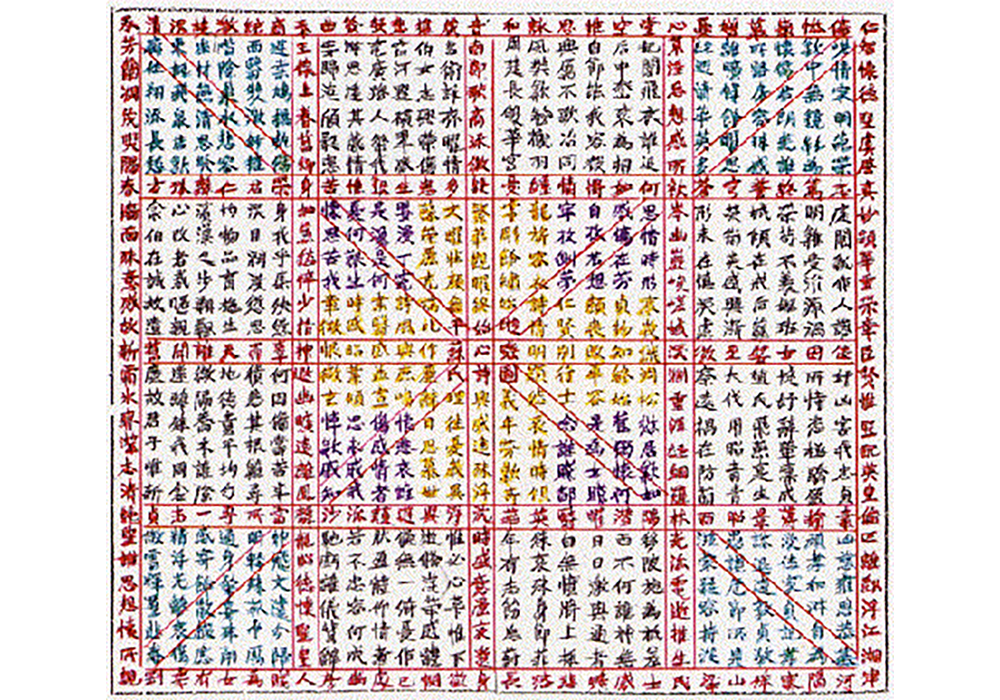

Das Xuanji tu (Sternmaße) ist ein Palindrom, das im vierten Jahrhundert in China von der Dichterin Su Hui verfasst wurde. Das Gedicht lässt sich in mehrere Richtungen lesen – vorwärts und rückwärts –, wobei jede Lesart eine andere Bedeutung vermittelt. Dieser Text wird mit den Anagrammgedichten von Unica Zürn kombiniert, bei denen jede Zeile eine strikte Permutation der Buchstaben einer vorgegebenen Zeile oder Phrase ist, meist der Titelzeile. Die reversiblen Gedichte von Su Huis Xuanji tu suggerieren einen zeitlichen Prozess, in dem sich die Zeit gleichzeitig vorwärts und rückwärts entfaltet. Die Anagrammgedichte von Unica Zürn implizieren einen zeitlichen Prozess, der stets in eine Richtung verläuft, bis keine sinnvollen Buchstabenumstellungen mehr möglich sind. Die formalen Prozesse der Transposition, Permutation und Retrogradation, die diese Gedichte strukturieren, sind auf Johannes Ockeghems Missa Prolationum und Josquin des Prez Missa L’homme armé super voces musicales abgestimmt, in der jede Stimme in einem proportionalen Kanon zu den anderen Stimmen steht, um einen zeitlichen Abstand zueinander zu wahren und sich niemals zu berühren. Mein Prozess der Reverse Transkriptionen nutzt die Silben und Zeilenumbrüche von Ezra Pounds China Cantos als rhythmische Struktur, um diese Messen mit Texten von Su Hui und Unica Zürn neu zu schreiben. Der Prozess der Reverse Transkriptionen rückt die geräuschähnliche Klangerzeugung des Chores – Körper, Lunge, Kehle, Zunge, Zähne und Lippen – in den Vordergrund, indem er sich auf einen kontinuierlichen Prozess des Schaffens und Auslöschens stützt, oder auf das Hinzufügen neuer Schichten unter Beibehaltung der Spuren dessen, was zuvor geschehen ist. Die Reverse Transkriptionen thematisiert in diesem Zusammenhang die Beziehung zwischen Erinnerung und Zeit mit Verfahren wie Transposition, Permutation und Retrograde, die versuchen, etwas zu bewahren, das durch seine unfassbare Materialität einen Verlust erfährt.